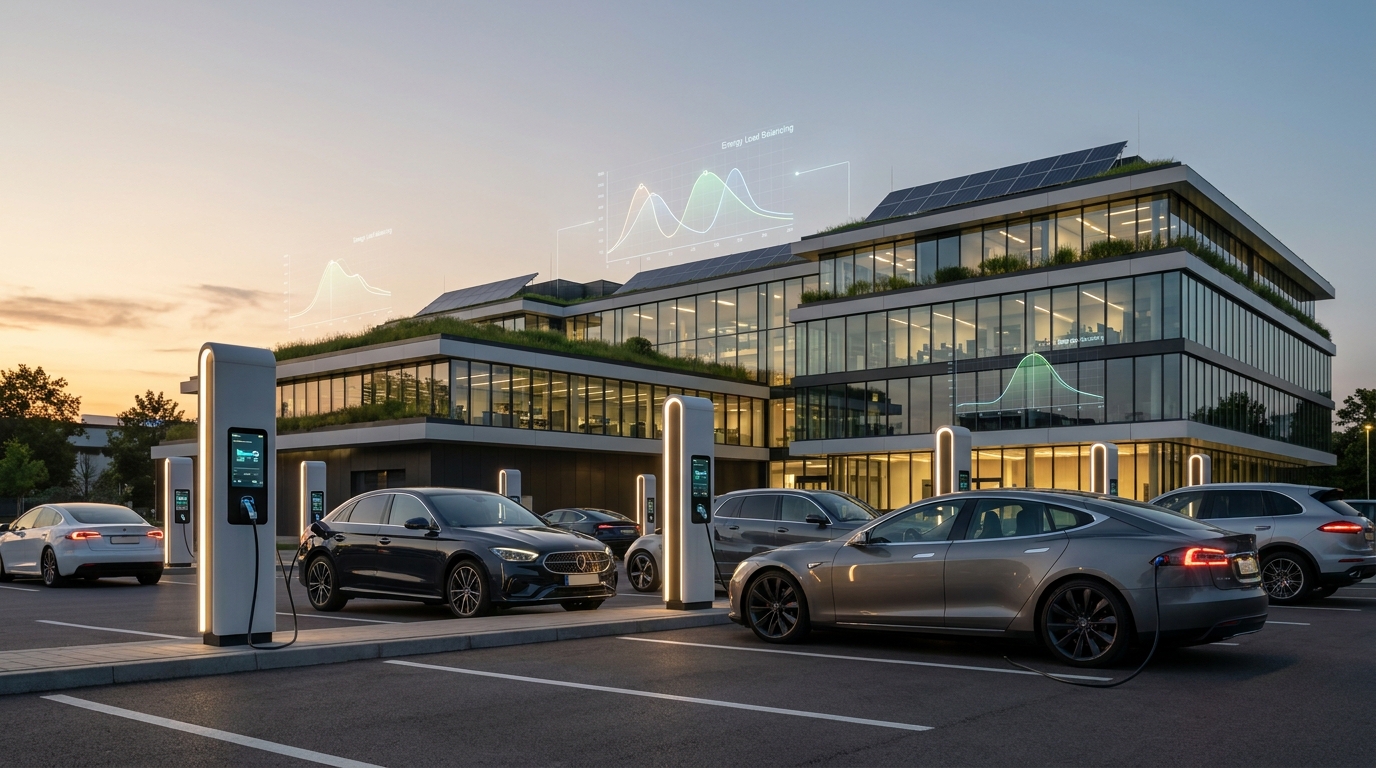
The Decarbonization Surge: European Ambition Meets Belgian Reality
The European transport landscape is undergoing a systemic structural transformation. Propelled by the European Union’s Alternative Fuels Infrastructure Regulation (AFIR) and aggressive net-zero 2035 targets, the shift from internal combustion engines to battery electric vehicles (BEVs) is no longer an environmental aspiration—it is an economic imperative. Nowhere is this momentum more pronounced than in Belgium. Through targeted corporate tax incentives, the Belgian government has engineered a dramatic phase-out of fossil-fuel company vehicle deductions, culminating in 2026 when only zero-emission corporate vehicles retain favorable fiscal status.
This sudden influx of hundreds of thousands of corporate and private EVs creates immediate operational challenges. When high-capacity batteries connect simultaneously to residential and commercial circuits, localized electrical grids experience sharp demand spikes. Achieving an efficient, profitable, and reliable charging ecosystem demands a profound departure from simple, unmanaged wallboxes toward sophisticated, interconnected energy management systems.
Residential Charging: Navigating Capacity Tariffs and Solar Integration
For private residents and enterprise employees charging at home, charging an EV is no longer merely about adding kilometers; it is about managing power draw against progressive grid pricing. In regions like Flanders, the introduction of the capacity tariff (capaciteitstarief) penalizes momentary power consumption peaks. An unmanaged 11 kW or 22 kW home charger running while household heat pumps and induction cooktops operate can cause a sudden surge in baseline peak demand, inflating annual utility bills.
To counter this, modern residential charging units integrate Dynamic Load Management (DLM) at the domestic electrical panel. By reading real-time household consumption via standard digital utility meters (such as the P1 port in the Benelux), the charger modulates charging speed in milliseconds. If household demand rises, the EV charging rate throttles down instantly, eliminating expensive peak tariffs.
"Smart residential charging has evolved from a passive convenience into an active financial optimizer that continuously arbitrates between grid tariffs, local solar yields, and vehicle readiness."
Furthermore, residential systems increasingly leverage solar integration. Instead of exporting surplus photovoltaic (PV) generation back to the grid for minimal feed-in tariffs, intelligent chargers dynamically route excess solar power straight into the vehicle’s battery. This maximizes self-consumption rates, preserves domestic energy independence, and shields homeowners from volatile retail electricity rates.
Commercial Hubs and Fleet Electrification: The Multi-Vehicle Balancing Act
For fleet managers and enterprise facility directors, depot electrification introduces complex logistical hurdles. Electrifying a commercial logistics fleet or corporate car park cannot be solved by simply installing dozens of high-output AC or DC chargers. Upgrading physical grid connections with local Distribution System Operators (DSOs) can take years and require immense capital expenditure.
Here, commercial-grade DLM serves as an intelligent software layer. Rather than dimensioning the grid connection for the theoretical maximum concurrent load, DLM platforms allocate available grid capacity based on dynamic algorithmic parameters:
- Operational Prioritization: Fleet vehicles scheduled for early morning departure receive prioritized charging over vehicles staying overnight.
- State of Charge (SoC) Optimization: Using telematics and standardized protocols, charging curves adapt dynamically to the unique battery health and capacity of each asset.
- Time-of-Use Arbitrage: Depot chargers shift charging schedules toward overnight off-peak windows or negative spot-market wholesale electricity intervals.
Another crucial commercial breakthrough is automated split-billing. In Belgium’s corporate-centric fleet ecosystem, employees regularly charge company cars at their private residences. Modern CPO platforms accurately meter this consumption, automatically reimbursing the employee based on verified local energy tariffs while routing consolidated digital billing directly to the employer's accounting ledger.
Interoperability Standards and Future Horizons: OCPP 2.0.1 to V2G
Underpinning this infrastructure is the transition toward open, vendor-agnostic communication protocols, primarily OCPP 2.0.1 and ISO 15118. These industry standards provide enhanced cybersecurity, remote device monitoring, and the technological framework for true Plug & Charge capabilities, where vehicle authentication and session initiation occur seamlessly without physical RFID cards or mobile apps.
Looking ahead, the next horizon is bidirectional energy flow: Vehicle-to-Home (V2H) and Vehicle-to-Grid (V2G). Instead of representing passive electrical loads, parked commercial and residential vehicle fleets are evolving into decentralized virtual power plants (VPPs). During peak grid stress, stationary EVs can inject stored green electrons back into local facilities or regional transmission networks, generating ancillary service revenue while ensuring grid stability. For organizations investing today, designing an infrastructure stack capable of supporting bidirectional protocols is vital to future-proofing investments.