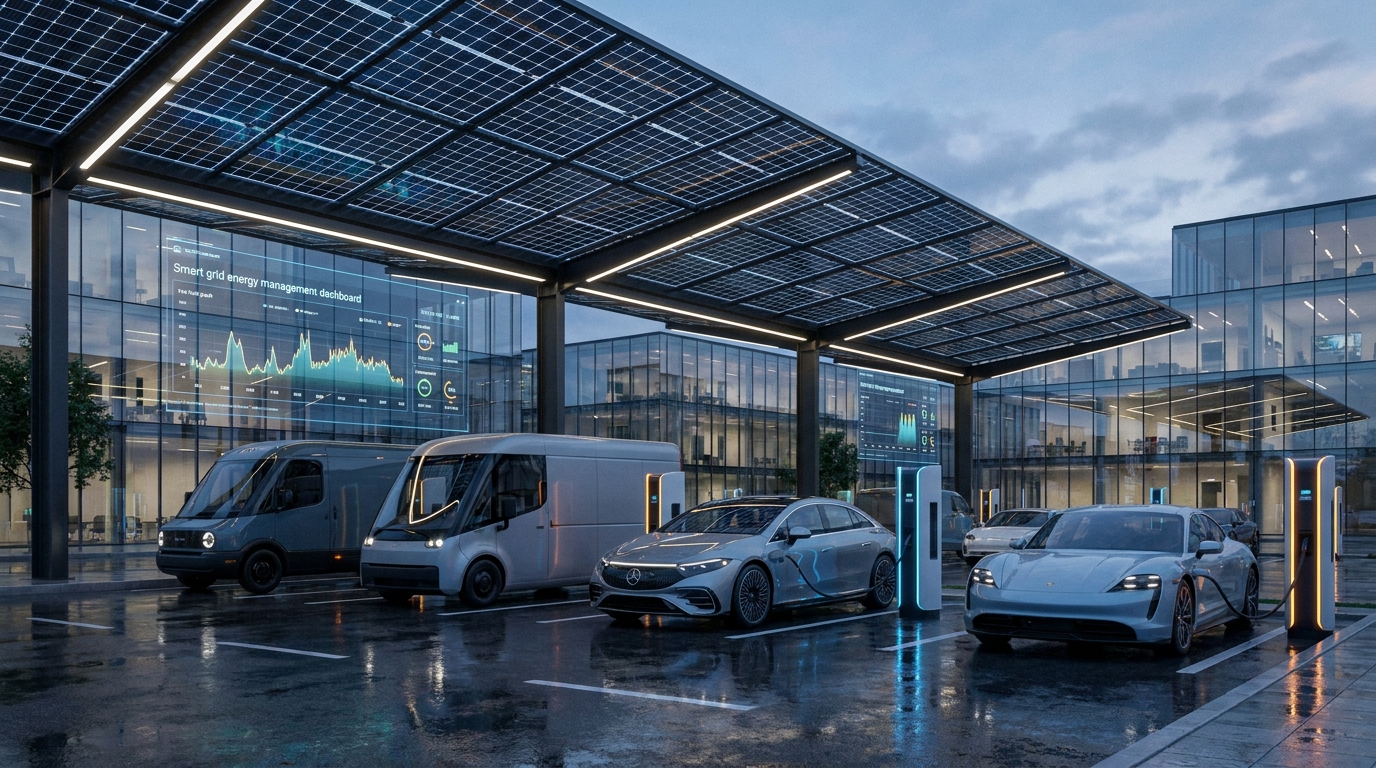
The Electrification Tipping Point in Europe and Belgium
The transition toward electric mobility across Europe has shifted from an early-adopter experiment into a core regulatory and operational mandate. With the European Union's Alternative Fuels Infrastructure Regulation (AFIR) setting binding deployment targets and strict consumer-facing transparency requirements, charging infrastructure is moving to center stage. Within this broader European framework, Belgium serves as a critical testbed and regional leader.
Driven by the federal legislative overhaul of corporate vehicle taxation—which systematically eliminates tax deductibility for fossil-fueled company cars between 2023 and 2026—Belgian corporate fleets are electrifying at breakneck speed. However, this surge introduces acute operational hurdles. Rapid EV deployment strains existing grid connections and introduces steep capacity charges if unmanaged. The solution lies in a profound technological evolution: moving from dumb power delivery points to high-intelligence, bidirectional, and dynamically throttled energy nodes.
Residential EV Charging: The Shift to Solar-Aware, Peak-Shaving Systems
Residential EV charging is no longer just about delivering 11 kW or 22 kW of alternating current (AC). In regions like Flanders, the introduction of the capacity tariff (capaciteitstarief)—which calculates network costs based on monthly peak electricity consumption—has fundamentally altered the economics of domestic charging. Plugging in an EV unmonitored at full power can instantly inflate a homeowner's monthly electricity bill.
To solve this, advanced residential charging stations now incorporate native Dynamic Load Balancing (DLB) and direct coupling with Home Energy Management Systems (HEMS). Key residential developments include:
- Real-Time Solar Surplus Tracking: Smart wallboxes modulate charging amperage in micro-increments to match instant rooftop photovoltaic (PV) generation, ensuring clean, zero-marginal-cost driving.
- Automated Dynamic Phase Switching: Systems automatically toggle between single-phase (down to 1.4 kW) and three-phase charging (up to 11 or 22 kW), allowing vehicles to capture low solar yields during overcast conditions without drawing from the grid.
- Peak-Shaving Algorithms: Charging speeds throttle down automatically when major domestic appliances (heat pumps, induction hobs) activate, keeping overall household draw below punitive capacity thresholds.
"Modern residential EV charging is no longer an appliance; it is an active node within the home microgrid, balancing variable solar generation with grid tariffs."
Commercial Infrastructure: Conquering Grid Constraints with Dynamic Load Management
For commercial facilities, distribution centers, and corporate office parks, multi-vehicle charging represents a significant power liability. Upgrading medium-voltage transformer cabins is capital-intensive, slow, and frequently denied by distribution system operators (DSOs) facing localized grid bottlenecks. Dynamic Load Management (DLM) has emerged as the definitive enterprise antidote.
Local vs. Cloud-Based Dynamic Load Management
Enterprise sites increasingly deploy hybrid DLM architectures. Local controllers meter the primary grid intake point in real time and distribute available headroom among dozens of active charging sessions within milliseconds, ensuring local safety limits are never breached even during internet outages. Concurrently, cloud-orchestrated algorithms prioritize charging schedules based on business heuristics: vehicle departure deadlines, battery state of charge (SoC), driver priorities, and real-time day-ahead dynamic energy tariffs.
By smoothing concurrent demand curves, commercial operators routinely expand their charging asset density by 300% to 500% without spending hundreds of thousands of euros on utility transformer upgrades.
Fleet Electrification: Navigating the Depot-Home Convergence and Split Billing
Commercial fleet electrification across Belgium and Europe faces a unique governance model: a large proportion of company drivers recharge corporate assets at their private residences. This hybrid structure requires complete operational visibility, standardized data interoperability, and frictionless expense settlement.
Automated Split Billing Architecture
In Belgium, the integration of certified split billing has become an absolute necessity. Modern wallboxes communicate via the Open Charge Point Protocol (OCPP 2.0.1) with Charge Point Operator (CPO) and fleet management backends. The charger measures the exact kilowatt-hours consumed by the company vehicle and automatically triggers a direct reimbursement to the employee based on verified regional electricity tariff rates (such as CREG averages in Belgium), while invoicing the employer's fleet account seamlessly.
Depot Electrification and Mission-Critical Dispatch
For last-mile delivery and medium-duty logistics fleets, depot charging solutions are integrating with Fleet Management Systems (FMS). Smart dispatch engines calculate required SoC based on next-day delivery routes, topographical gradients, and cargo weight. Instead of charging every van to 100% simultaneously, chargers sequentially stagger sessions, pre-condition vehicle cabins using grid power before departure, and drastically extend fleet battery health.
The Horizon: ISO 15118, Plug & Charge, and Vehicle-to-Grid Integration
Looking ahead, the roll-out of ISO 15118-20 represents the technological foundation for the next decade of European EV integration. First, Plug & Charge eliminates the friction of RFID cards and mobile applications by enabling cryptographic, automated handshakes between vehicle and charger. Second, bidirectional capability—Vehicle-to-Home (V2H) and Vehicle-to-Grid (V2G)—transforms parked electric vehicles into distributed virtual power plants (VPPs).
As regulatory frameworks mature to remunerate decentralized energy flexibility, fleet operators and homeowners across Belgium and Europe will evolve from passive energy consumers into compensated grid stabilizers, unlocking entirely new revenue streams while fortifying energy sovereignty.